Why Trust Matters More Than Ever in Healthcare Communication

In healthcare, information is everywhere, but trust is harder to find.
Patients, employees, and communities are exposed to a constant stream of headlines, updates, and opinions. Some are helpful. Many are incomplete. A few are misleading. In this environment, trust isn’t built by saying more. It’s built by saying the right things, clearly, and at the right time.
Trust Drives Engagement
One of the most underestimated drivers of health outcomes is trust. When people feel informed rather than pressured, they’re far more likely to engage with care. They ask better questions, follow through more consistently, and make decisions they feel confident about.
This applies across the board, from workplace health programs to preventative screenings. When communication is rushed or overly complex, participation drops. When it’s clear and respectful, engagement rises.
Transparency Doesn’t Mean Alarm
There’s a misconception that transparency creates fear. In reality, the opposite is often true.
Clear communication that acknowledges what’s known, what’s still evolving, and how decisions are made helps people contextualize risk. It reduces speculation and builds confidence. Silence, on the other hand, creates space for misinformation to fill the gaps.
Responsible transparency isn’t about amplifying every update. It’s about providing context so people can understand the bigger picture.rth
The Role of Leadership
Healthcare leaders play a critical role in shaping how information is delivered. That responsibility goes beyond compliance or messaging. It’s about setting a standard for clarity, honesty, and consistency.
Trust is built over time, through repeated experiences where people feel respected and informed. It’s fragile, but when earned, it becomes one of the strongest assets an organization can have.
Regulatory Updates and Ongoing Research
Recent reporting around potential regulatory updates, including discussion of a possible boxed (black box) warning for certain COVID-19 vaccines, has reinforced why clear communication matters so much.
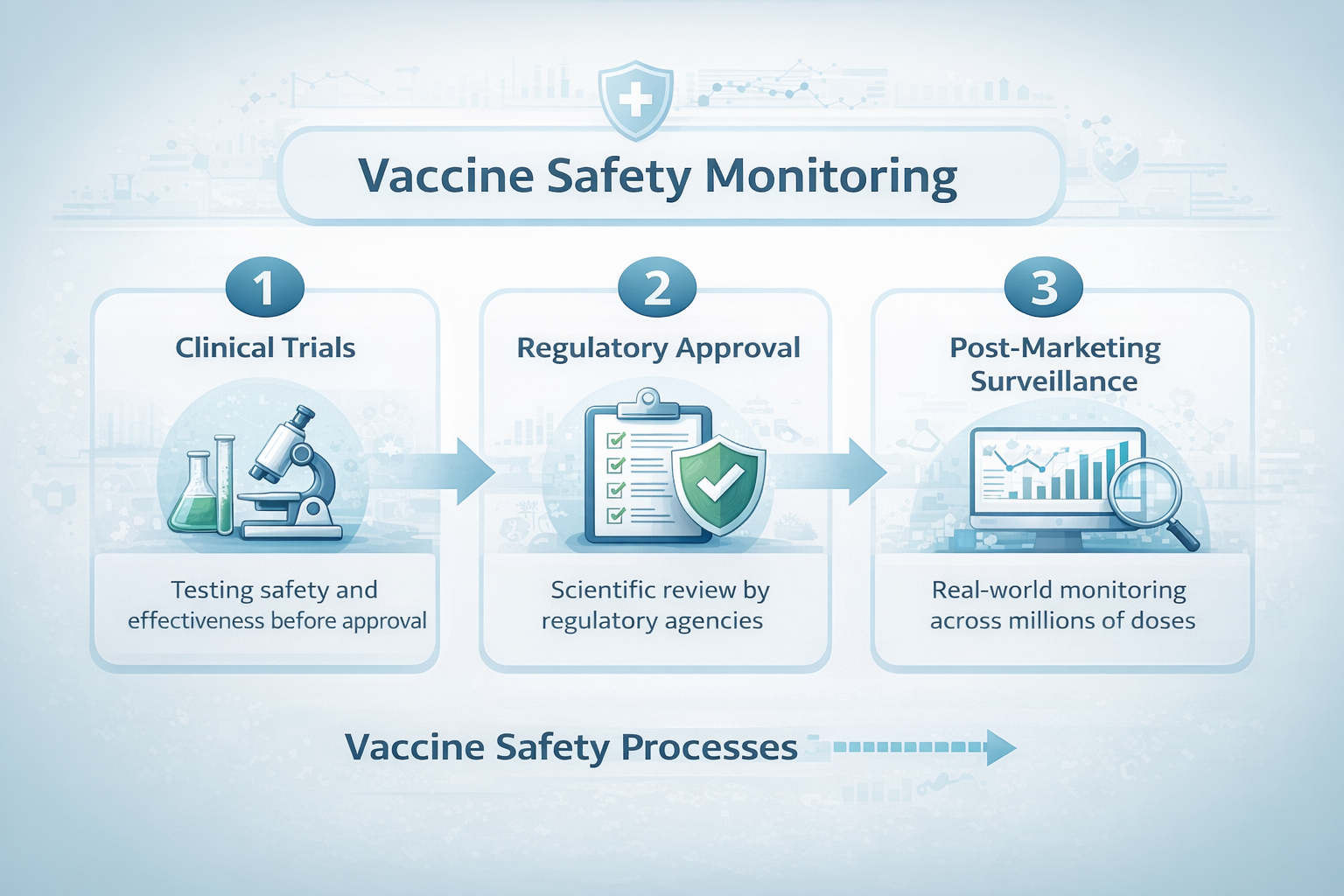
At the time of writing, details around any such warning have not been fully finalized or publicly detailed. What’s important to understand is that regulatory review and post‑marketing surveillance are standard parts of how medicine evolves. These processes exist to continuously reassess safety as more real‑world data becomes available.
When updates are discussed without context, they can easily be misunderstood. Responsible communication means acknowledging uncertainty, avoiding speculation, and helping people understand how and why regulatory decisions are made, not just reacting to headlines.
What the Science Continues to Show
Alongside regulatory review, research into mRNA vaccines continues to deepen scientific understanding.
Recent studies have focused on better explaining the biological mechanisms behind rare inflammatory responses observed after mRNA vaccination. This type of research is not about disproving safety, but about improving it, identifying why rare events occur, who may be most susceptible, and how future vaccine design and guidance can continue to evolve.
This is how progress happens in medicine: observation, study, refinement, and transparency.
Moving Forward
As healthcare continues to evolve, the need for thoughtful communication will only grow. Data, research, and regulation all matter, but how that information is shared matters just as much.
Trust isn’t a soft metric. It’s foundational to better outcomes, stronger engagement, and more resilient systems.
And in an environment shaped by rapid information and evolving science, it may be the most important work we do.
Featured Posts